Documentary Forthcoming
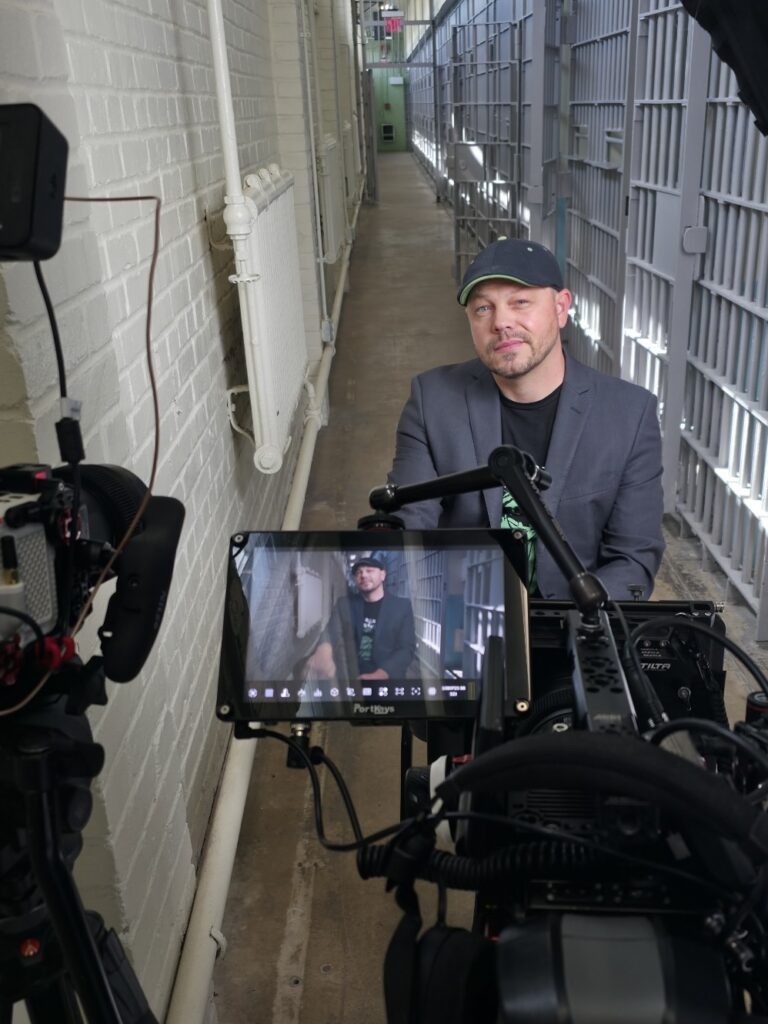
In the summer of 2026, I am collaborating with J. McNair on a documentary project on the connections between war, trauma, and incarceration. We recently filmed at Lorton Reformatory, outside of Washington D.C., a former federal prison which housed a 99 percent Black population. This is where Ari Sesu Merretazon organized with fellow incarcerated Vietnam veterans and fought for disability rights and acknowledgement of the large number of veterans in prison.
Waging Peace in Vietnam
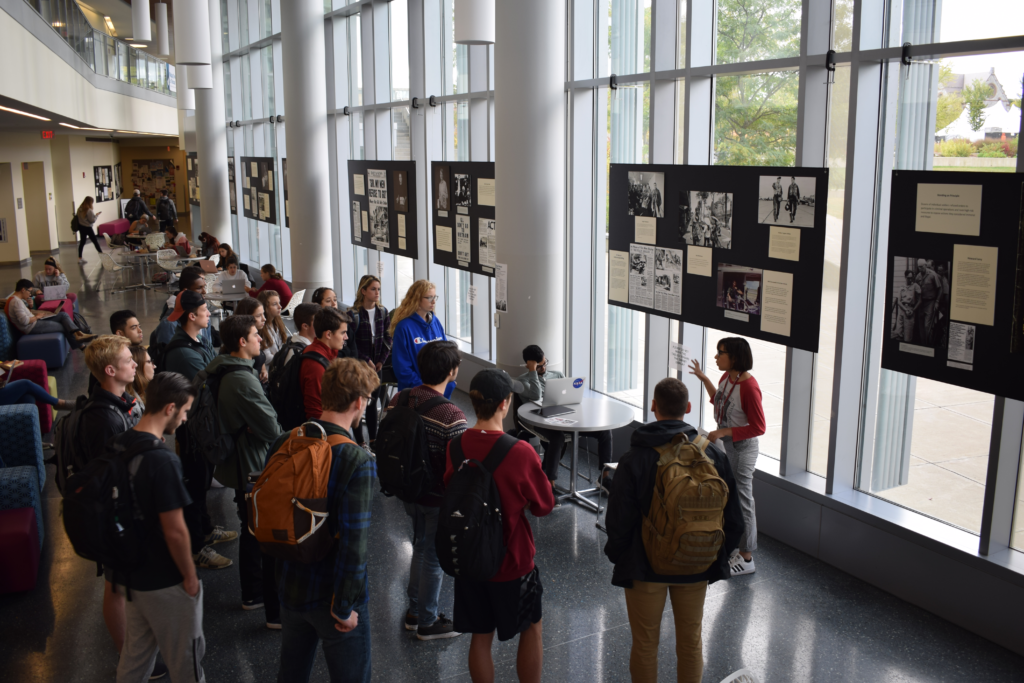
As a doctoral candidate at UMass Amherst, I designed a practicum in Public History and Comparative Literature, titled “Waging Peace in Vietnam,” which was based on an international exhibit, designed by Ron Carver, and the accompanying Waging Peace in Vietnam book, co-edited by Ron Carver, David Cortright, and Barbara Doherty. This course trained undergraduate students to design unique public history tours of this exhibit based on oral histories in the book. Students helped install the exhibit and served as docents while it was on campus in September and October of 2019. Read more about this experience below.

“One hundred and one years since the end of the First World War, militarism still pervades American culture, and our collective amnesia about our own history puts the world at great risk. In 1973, the year American forces pulled out of Vietnam, Kurt Vonnegut wrote about the end of WWI:
“It was during that minute in nineteen hundred and eighteen that millions upon millions of human beings stopped butchering one another. I have talked to old men who were on battlefields during that minute. They have told me in one way or another that the sudden silence was the voice of God. So we still have among us some men who can remember when God spoke clearly to mankind. Armistice Day has become Veterans’ Day. Armistice Day was sacred. Veterans’ Day is not. So I will throw Veterans’ Day over my shoulder. Armistice Day I will keep. I don’t want to throw away any sacred things.”
Kurt Vonnegut Jr. Breakfast of Champions
A World War II veteran himself, Vonnegut saw clearly the erasure of peace as a celebrated ideal from American national identity. Two years later, Paul Fussell published The Great War and Modern Memory, arguing that war is necessarily ironic because it always lasts longer and destroys more lives than expected. The greatest irony is that each generation perpetually relearns the timeless truths about war. Time and again, waves of soldiers have marched to battle and confronted the “old lie”—that it is sweet and noble to die for one’s country. This forgetting does not occur naturally; it is by design. The public education system omits, sanitizes, or propagandizes the history of American wars. In my own case, I did not study the war in Vietnam until graduate school.
An exhibit currently touring U.S. college campuses, Waging Peace in Vietnam, helps to correct the misremembering of the war in Vietnam. It reinserts the voices of veterans against the war and documents the most powerful and most diverse grassroots antiwar movement in U.S. history. Told from the perspective of American soldiers and veterans who opposed the war, both the exhibit and the book which accompanies it ask us to recalculate who counts as a war hero and to reconsider our understanding of patriotism. Both argue explicitly that veterans served as powerful agents of peace and significant factors in the U.S. withdrawal of troops in Vietnam. This history contradicts one of the most pervasive myths and false dichotomies about the war—that peace activists and Vietnam veterans were in opposition. In fact, veterans and GIs led the peace movement, and their testimonies provide the most insightful sources from which we may learn from the past and mobilize young people for the challenges of the twenty-first century. . .”
Finish reading this article, “Waging Peace in Memory,” at Massachusetts Review.
Public History Panels
In the fall of 2021, The Smithsonian National Museum of American History invited me to join a History Film forum on “It’s a Wonderful Life” (1946). I joined Christopher Wilson, director of Experience Design at the Smithsonian, along with Ryan Lintelman, the museum’s entertainment curator, film critic Nell Minor, curator of the State Historical Society of Iowa Leo Landis, and daughter of Donna Reed, Mary Owen. We discussed the history portrayed in the film, such as the Great Depression, the Second World War, depictions of African Americans, immigrants, and women in the film, and more. Read about the forum here or better yet, watch the panel below.
Documentary Film
I have produced short documentary films for families project based on oral history interviews. The Strawberry Hill project portrays the family history of the Sostariches, who emigrated from Croatia to the United States in the early 20th century and settled on Strawberry Hill in Kansas City, KS. It tells a story of hardship and perserverance during the First World War, the 1918 Influenza pandemic, and cultural assimilation in American society. The film is narrated by Joe Forte, and music is by St. John’s Tamburitzans.
Public History Administrative Assistant
In the 2019-20 academic year, I had the great opportunity to serve as the UMass Public History program’s administrative assistant. It was a special privilege to work with Director of UMass Public History Dr. Marla Miller, during her tenure as President of the National Council on Public History. I organized UMass Public History program’s “takeover” of the NCPH Instagram account. During that year, I organized and photographed events, such as a field trip to Old Sturbridge Village, facilitated student presentations, coordinated campus visits of public historians, and managed the social media accounts of the program. In the Spring semester, our plans for organizing alumni events at the NCPH conference in Atlanta were cancelled due to COVID-19, and we all learned to transition into a virtual workspace. At the end of the semester, I created a virtual celebration of UMass History and Public History graduate students, editing videos and organizing a celebration via social media.
Internships
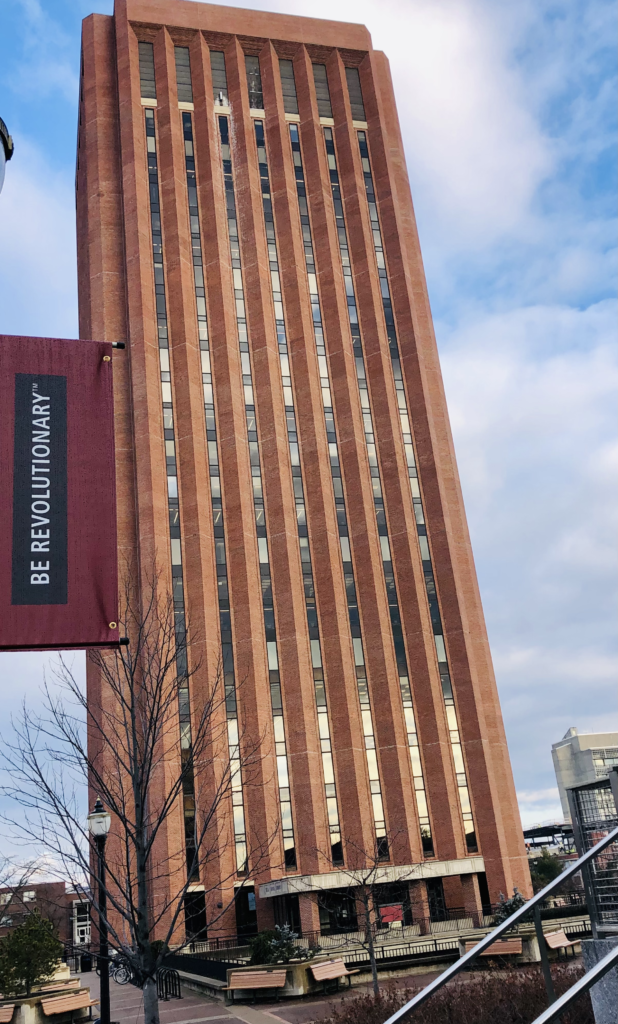
I earned a graduate certificate in Public History from UMass Amherst, specializing in Oral History and History Communication. In the summer of 2017, as a Charles K. Hyde Intern Fellow, I completed an internship at the W.E.B. Du Bois Library in Special Collections and University Archives, under the supervision of Aaron Rubinstein, learning to process and archive oral histories, create meta-data, and edit video and audio files. In 2020, I was the first recipient of the Du Bois Library’s Kenneth R. Feinberg Fellowship for projects that value human life, enabling me to process the Incarcerated Veterans Oral History Project.
In 2014, I also completed an internship at the Oklahoma Oral History Research Program, recording over 30 oral history interviews with veterans as part of the “Spotlighting Oklahoma” project. Both of these internships developed my skills as an oral history practitioner, providing a grounded training in oral history interviewing, editing, and archiving.
Emily Dickinson Museum
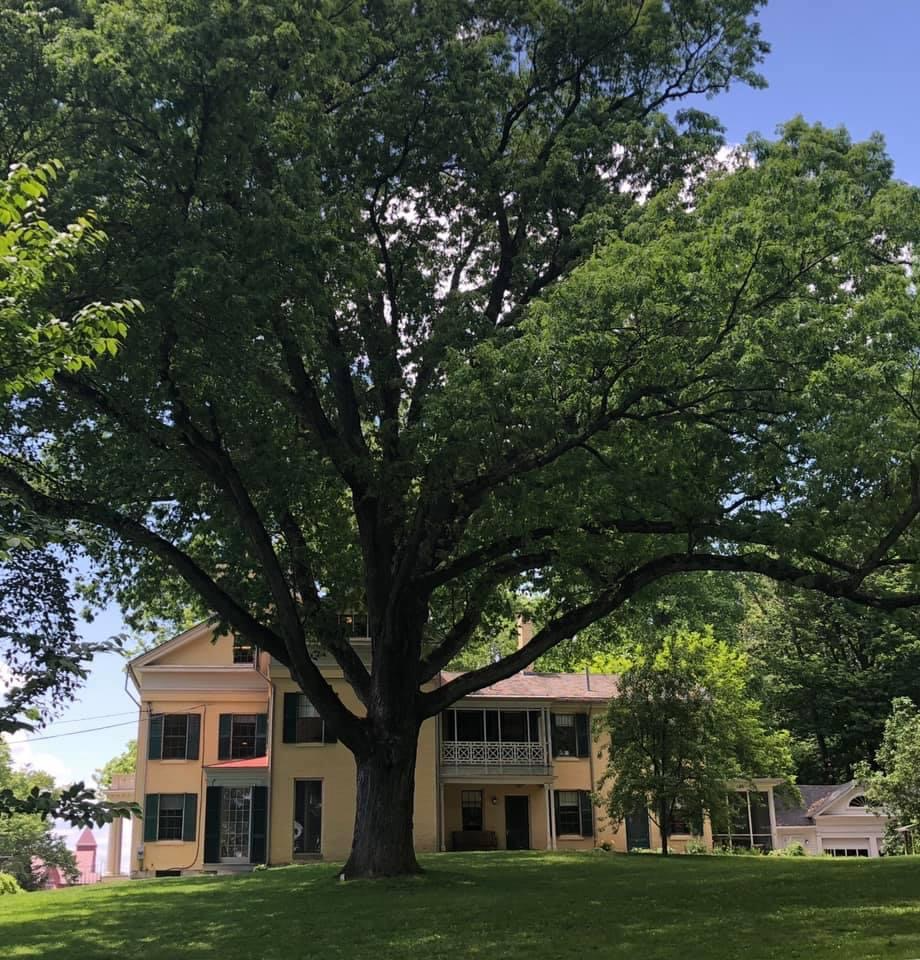
In 2016, I first got involved in the Emily Dickinson Museum, conducting oral history interviews as part of a class service project in Sam Redman’s oral history course. During this time, I recognized the gravitational pull of Dickinson on people today, scholars and the public alike. Afterwards, I became a tour guide and museum assistant during the summers. One of the most memorable times of my graduate studies was reading for comprehensive exams in Dickinson’s home. There was something uniquely peaceful about reading in the place where the poet spent so many years of her life and wrote her most famous poetry.
History Communication
During my graduate studies at UMass, I had several opportunities to expand my skillsets. As a student of History Communication, I learned to communicate history to a broader public audience, using a variety of multi-media, including infographics. As an example, check out the infographic and timeline I published in this special issue on the Vietnam War in Oklahoma Humanities Magazine. I also learned audio and video editing skills to produce accessible oral history clips. With social media, I reached a national audience, sharing oral history clips and raising public awareness to social issues. Additionally, I learned a variety of photography and videography skills. Through these experiences, I had the profound opportunity to meet and record a public lecture by Daniel Ellsberg, the whistle-blower during the Vietnam War, who leaked the Pentagon Papers.
